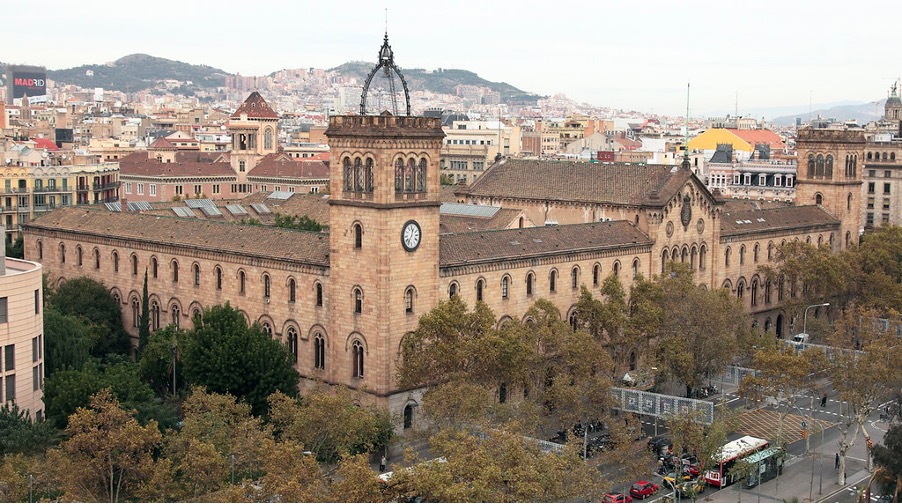
CCiTUB are the core facilities of the University of Barcelona and offer access to a wide range of characterisation techniques in biomolecular fields.
The Scientific and Technical Center of the University of Barcelona (CCiTUB) offers access to a wide range of complementary techniques and is one of the largest mid-size infrastructure facilities in Spain, with highly-qualified staff specialists, and the broadest range of characterization technologies. The center is is embedded in one of Spain’s most active research ecosystems: the Universitat de Barcelona with approximately 300 officially recognized research groups. It’s also near the Barcelona Science Park, a dynamic environment with more than 3400 professionals, 9 research centres and more than 100 companies. It actively fosters integrative structural biology approaches in collaboration with nearby infrastructures, such as the ALBA Synchrotron and cryo-electron microscopy platforms, together forming a major structural biology hub in Southern Europe.
The NMR instruments at CCiTUB has been part of the Spanish national infrastructure for biomolecular NMR since 2000. Initially a single-site facility, it was expanded in 2018 to form a distributed infrastructure together with the Bilbao and Madrid nodes. These three sites now offer independent access through Instruct-ERIC, with the Barcelona node formally integrated into the European infrastructure in 2025.
In 2022, the CCiTUB installed Europe’s first 1 GHz NMR spectrometer equipped with a high-temperature superconducting magnet, marking a major milestone in high-field NMR technology. Further upgrades followed in 2024, with new consoles and cryoprobes on the 800 MHz and 600 MHz instruments. The 800 MHz system now includes direct heteronuclear detection capabilities, enabling advanced studies of biomolecular structure and dynamics, particularly for intrinsically disordered proteins and biologics.
Access to the facility is available through competitive open calls via the ARIA platform. Scientific and technical support is provided for all applications submitted through Instruct, including guidance on experimental design and instrument selection. For assistance, please contact: promocio@ccit.ub.edu
Lluís Solé i Sabarís, 1-3 Barcelona
Barcelona
Spain
How to Find
The NMR Facility is located within the Barcelona Science Park (Parc Científic de Barcelona, PCB), near the FC Barcelona Stadium.
Main entrance: Carrer Baldiri Reixac, 10–12, 08028 Barcelona
From Sants–Barcelona Station:
• Metro: Line L3 (Green Line) to Palau Reial or Zona Universitària station. The Cluster building is within walking distance.
• Bus: Several city buses connect Sants Station with the Zona Universitària.
• Taxi: Approx. 10–15 minutes to the PCB.
From Barcelona–El Prat Airport:
• Various transport options are available. See airport directions. [resainn.com]
By Car:
• Take the AP7/B-30 motorway, exit at "Barcelona - Zona Universitària" and follow signs to the University of Barcelona, Campus Diagonal.
The NMR laboratory at the Scientific and Technical Center of the University of Barcelona (CCiTUB) is located within the Barcelona Science Park (PCB), a leading research hub in Southern Europe. The facility is part of the Spanish national infrastructure R-LRB and has recently joined the European network Instruct-ERIC, offering advanced NMR services to both expert and non-expert users.
The service provides access to high-field liquid-state NMR spectrometers (1.0 GHz, 800 MHz, and 600 MHz), equipped with cryoprobes and direct heteronuclear detection capabilities. These instruments support a wide range of applications in structural biology, drug discovery, and biologics characterisation, including the study of intrinsically disordered proteins (IDPs).
While protein NMR is often considered a sophisticated technique, the facility offers guidance and support to users with varying levels of expertise. Local research groups and expert staff assist in experimental design, sample preparation, and data interpretation, helping researchers identify how NMR can address their scientific questions.
View All Magnetic Resonance Techniques at Instruct